
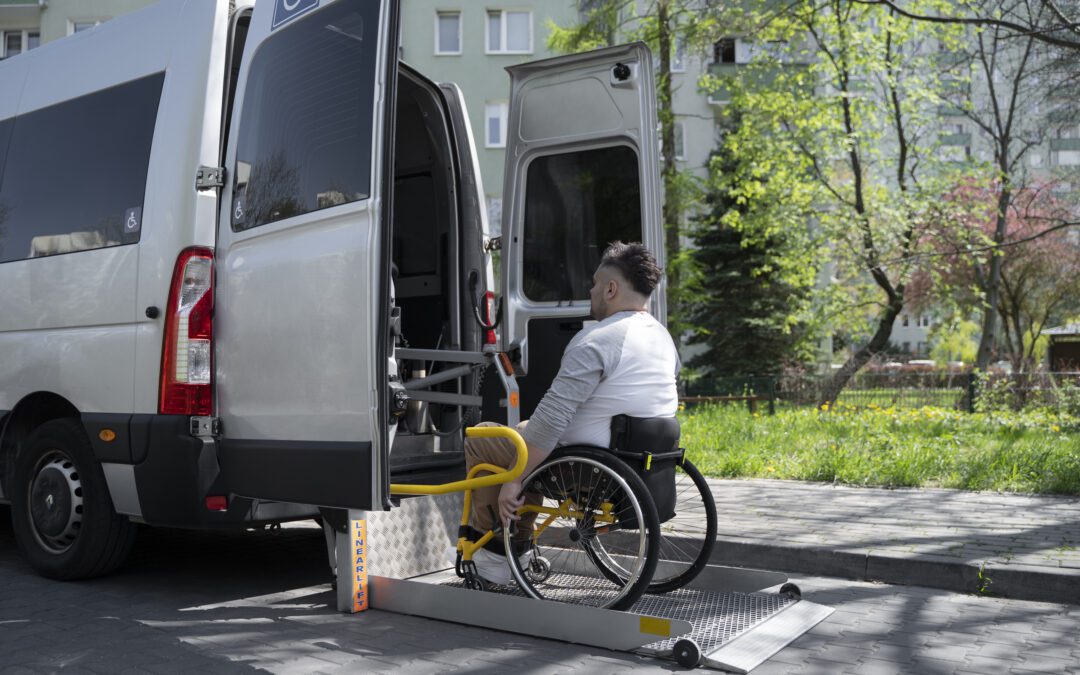
ABRAZA: robotic arm for communication support for wheelchair users
The ABRAZA project emerges as an opportunity to conduct research, acquire knowledge, and provide a solution for individuals with significant support needs who use wheelchairs—a need that has not been adequately addressed by the current capabilities and expertise of manufacturers of assistive products within the health and social care sectorsurge como una oportunidad para investigar, adquirir conocimiento y ofrecer una solución a la necesidad de personas con grandes necesidades de apoyo en sillas de ruedas que no ha sido adecuadamente cubierta por las capacidades y competencias actuales de los fabricantes de productos de apoyo del sector sociosanitario.
Project description:
The project focuses on the research and prototyping of a universal robotic support solution—based on a robotic arm—designed to facilitate communication, assistance, and autonomy for individuals with significant support needs. This assistive device can be used from an early age by wheelchair users, enabling the implementation of augmentative and alternative communication (AAC) methods. In later stages of research, it will also provide other forms of assistance, helping users navigate an increasingly digitized environment.
To this end, the research for this project will focus on a study of a potential universal support device—based on a robotic arm—designed to facilitate communication, assistance, and autonomy for wheelchair users with significant support needs.
General objective:
The project’s objective is to design an assistive device that initiates and sustains a user’s communication system throughout their life—starting from an early developmental stage as a means of engaging with the world. This includes future access to social networks via a keyboard and literacy skills, control over home automation systems, and a learning tool for navigating and functioning within an increasingly digitized environment. In essence, it is a multifunctional, robust, advanced, deployable, portable, and permanent robotic arm, designed to adapt to each individual’s unique needs based on their specific method of digital access—whether through facial movements, eye tracking, switches, voice commands, or other means.
Results:
The results of this project will help develop new knowledge in drive technologies and their associated control systems, advanced plastic materials, innovative manufacturing techniques, haptic technologies for control devices, and low-power electronic control hardware—all of which can be implemented in a wide variety of applications. The specific results expected from the execution of this project are listed below:
- Market study on multifunctional robotic arms.
- Design of an advanced multifunctional robotic arm prototype that integrates and implements the developments and advancements generated during the project.
Project duration:
01/08/2025 to 30/06/2026
National project in cooperation with:



Funded by:
Application for grants to support innovative business clusters, aimed at improving their competitiveness and their contribution to strategic autonomy, in accordance with the Order of August 25, which issues the call for applications for 2025 (Official State Gazette [B.O.E.] No. 206, of August 27, 2025)


Contact person:
Blanca Moral – blanca.moral@itcl.es
