
CYBERSECURITY
The Cybersecurity and IT Architectures research line at ITCL is focused on developing secure, scalable solutions tailored to the most demanding digital and industrial environments. This line works closely with companies to design and implement resilient technological infrastructures capable of handling large volumes of data while ensuring the security, confidentiality, integrity, and availability of that information.
Our work centers on the design and implementation of secure, distributed architectures, including on-premise, cloud, edge, and fog computing infrastructures. These solutions are built following principles of Security by Design and Defense in Depth, incorporating proactive measures against cyber threats.
We develop and integrate advanced mechanisms for authentication, encryption, continuous monitoring, and intrusion detection, applied to both corporate systems and industrial or critical infrastructures. We also focus on the application of cybersecurity standards and best practices such as ISO 27001, NIST, and compliance with specific sectoral regulations.
Additionally, we design and validate secure architectures for connected environments such as Smart Cities, Smart Energy systems, and Factories of the Future (FoF), where distributed systems must ensure the protection of devices, communications, and sensitive data.
Our experience in R&D projects spans the entire country, collaborating with companies that require robust and cybersecure technological environments as the foundation for their digital transformation and evolution towards connected, intelligent industrial models.
CYBERSECURITY CAPABILITIES
GOVERNANCE, RISK, AND COMPLIANCE
- Threat identification and risk assessment related to information security that could impact assets and business continuity.
- Definition of policies and regulations to implement an effective cybersecurity strategy that protects information and ensures regulatory compliance.
- Awareness and training to promote a cybersecurity culture among employees and encourage good practices and skills to identify risks.
- Alignment with standards and frameworks (ISO 27001, NIST, CIS, etc.).
SECURE ARCHITECTURE AND SYSTEM DESIGN
- Design of secure network architectures based on principles like Zero Trust, least privilege, and defense in depth.
- Secure integration of IT (Information Technology) and OT (Operational Technology) environments.
- Development of secure and robust systems applying security-by-design from the outset.
- Analysis of requirements and characteristics of each application individually, using secure software development practices.
DATA SECURITY
- Implementation of measures to ensure the confidentiality, integrity, and availability of an organization’s critical data.
- Integration of post-quantum cryptography algorithms into systems, including low-performance devices (microcontrollers) or FPGAs, to ensure resistance against quantum attacks.
- Development of blockchain-based solutions to ensure data integrity and traceability.
- Application in various environments: healthcare, industrial, automotive, etc.
CYBERSECURITY LABORATORY
- Simulation of an IT/OT environment through a hybrid (physical and virtual) lab to carry out attacks in a controlled and isolated setting on any part of the topology.
- Evaluation of various architectures, configurations, and security tools to test their effectiveness and compare different security approaches.
- Analysis of vulnerabilities, mitigation strategies, response protocols, etc., across diverse scenarios to ensure the security of industrial environments or critical infrastructures.
- Generation of datasets to train AI models, using data from network traffic, malware, event logs, etc
THREAT MONITORING AND DETECTION
- Application of artificial intelligence techniques to detect anomalies in communications and processes.
- Deployment of monitoring systems with real-time detection capabilities and alert visualization on dashboards.
- Use of honeypots to research real-world threats and attack techniques with the aim of developing more effective defense measures.
OUR CYBERSECURITY TEAM
This line is driven by highly qualified senior and junior researchers committed to continuous innovation and development. Our team includes computer scientists, mathematicians, data analysts, and more.
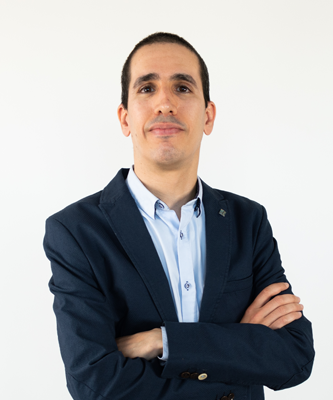
Ángel López Campo
Head of Cybersecurity
Computer Engineer with extensive experience in participating in and managing R&D projects, especially in the fields of cybersecurity, embedded devices, and secure software development.
His main research areas focus on developing cybersecurity solutions for industrial environments and critical infrastructures, particularly related to honeypots, network monitoring systems, and anomaly detection. He is also specialized in IoT system design and the study of their vulnerabilities and protection measures, such as integrating post-quantum cryptography. He holds several software registrations and a patent.
As the head of Cybersecurity solutions at ITCL, he coordinates a multidisciplinary team to carry out projects and research that protect and add value to companies.
RESEARCH PROJECTS
AIAGENT4CYBER – Ciberdefensa basada en inteligencia artificial multiagente
Proyecto europeo de ciberseguridad que propone un enfoque innovador basado en IA multiagente para la monitorización de amenazas en tiempo real
Duración: enero 2026 – enero 2029
ICONICA: Investigación en CONducción segura, Inteligente, Conectada y Autónoma
El proyecto investiga soluciones sobre el vehículo conectado y autónomo del intercambio de información V2I y V2V mediante el uso de redes de comunicaciones 5G, con gran velocidad y muy baja latencia.
Duración: Octubre 2024 – Diciembre 2025

BIOTECARE – Avance tecnológico basado en el dato para la optimización de procesos biotecnológicos, sanitarios y de cuidados
El proyecto busca impulsar la investigación y el desarrollo de soluciones innovadoras basadas en ciencia de datos, IA y Deep Learning, para así avanzar en la integración entre la medicina y las tecnologías mencionadas, para mejorar cómo diagnosticamos, tratamos y prevenimos enfermedades y la gestión general de la atención médica y experiencia de paciente.
Duración: 2024 – 2026

QuamtumCrip – Investigación de la ambivalencia de la computación cuántica para resolver problemas de optimización y encriptación post-cuántica
El proyecto QuantumCrip investiga en algoritmos y aplicaciones de la computación cuántica tanto en ordenadores como en simuladores cuánticos. Además, investiga en algoritmos de criptografía post-cuántica propuestos por NIST y su ejecución eficiente en hardware con el uso de las FPGA.
Duración: 2024-2027
Ecosistema EIFEDE: Impulsa la Energía con IA y Datos
El objetivo general de la Agrupación EIFEDE es promover un entorno propicio para la innovación empresarial, centrándose en el desarrollo y la implementación de tecnologías habilitadoras dentro del sector energético
Duración 2024-2025

AI4HOPE – Salud, optimismo, propósito y resistencia en cuidados paliativos de la demencia basados en IA
AI4HOPE se centra en implementar un Sistema Avanzado de Planificación de Cuidados para pacientes con demencia y cuidadores, integrando la regulación emocional y el manejo del dolor con modelos de IA para mejorar la atención, reconociendo la demencia como una enfermedad con límite de vida.
Duración: 2024-2027